REACTIVE DOG TRAINING IN PERTH
Helping you understand your dog's reactivity, build the confidence to manage challenging situations and develop the skills to change their behaviour.
Location: Pet Logic Training Centre, Wangara, and selected training locations around Perth.
Our Approach: Veterinary behaviour consultation, one-to-one training and supported group practice.
Eligibility: An initial veterinary behaviour consultation is required before commencing reactive dog training.
Reactive Dog Training
Living with a reactive dog can be exhausting.
When you got your dog, you imagined enjoying walks in the park, trips to the beach, visits to coffee shops, hiking in the hills or watching school events together.
Instead, you're walking your dog after everyone else has gone to bed or before they get up. You're constantly scanning for other dogs, changing direction to avoid them, or perhaps you've just given up on walks altogether.
I get it. It's embarrassing when your dog is barking and lunging at other dogs, or even people. It's frustrating when they seem unable to stop and aren't responding to you. And you're worried about their safety and the safety of those around you.
Perhaps the hardest part is not really understanding why your dog is behaving this way in the first place, or knowing how to help them.
You may have even tried different trainers and training methods, yet nothing really seems to work.
Here's the thing. You don't need your dog to love every other dog. You just need them to stop what they're doing, check in with you and be able to walk away. From there, the rest of the dream can start to become a reality.
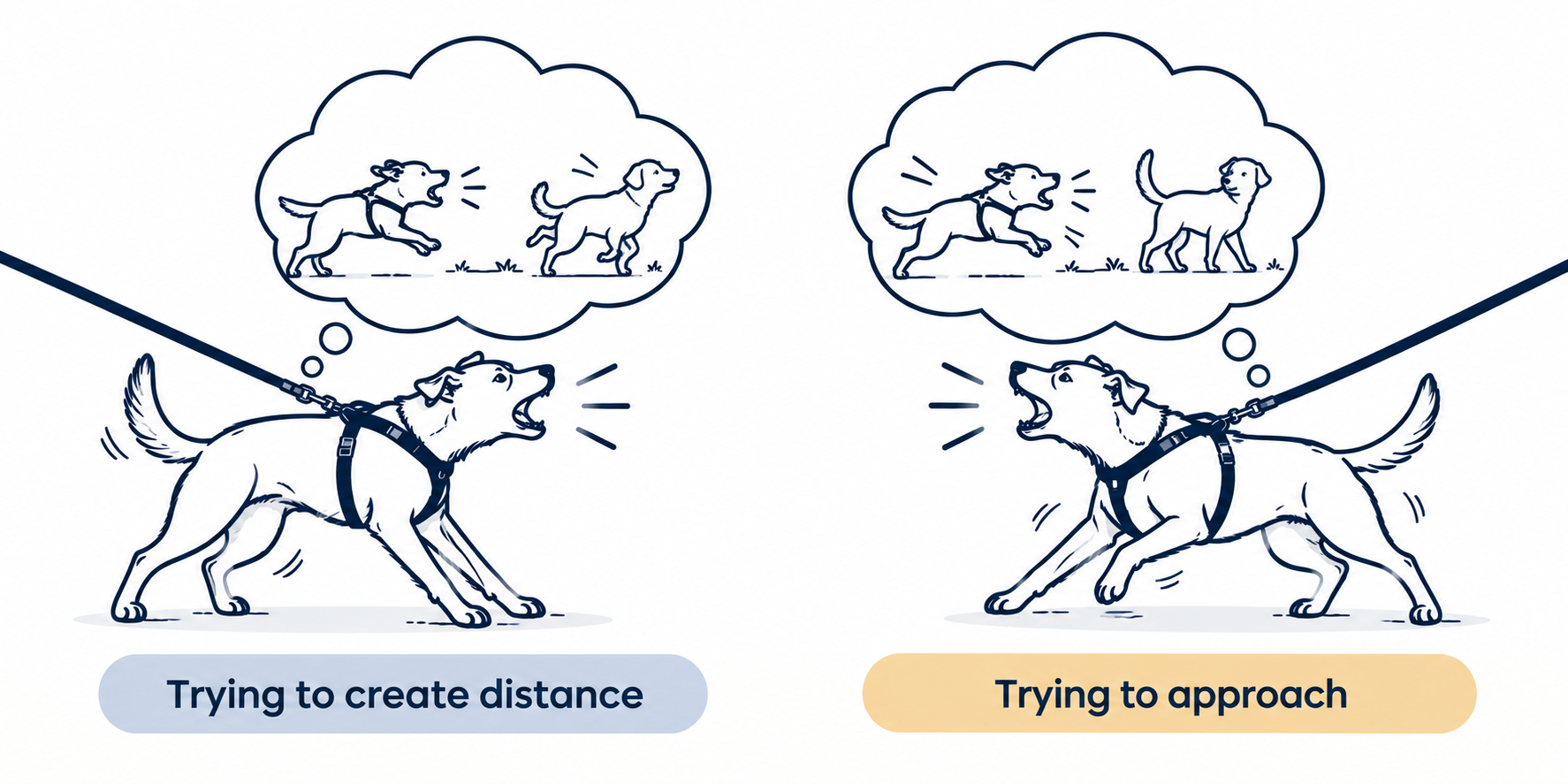
Not all reactive dogs are reacting for the same reason.
Two dogs might both bark and lunge at other dogs, but for very different reasons. One may be frightened and trying to create distance, while another may be frustrated because they cannot approach.
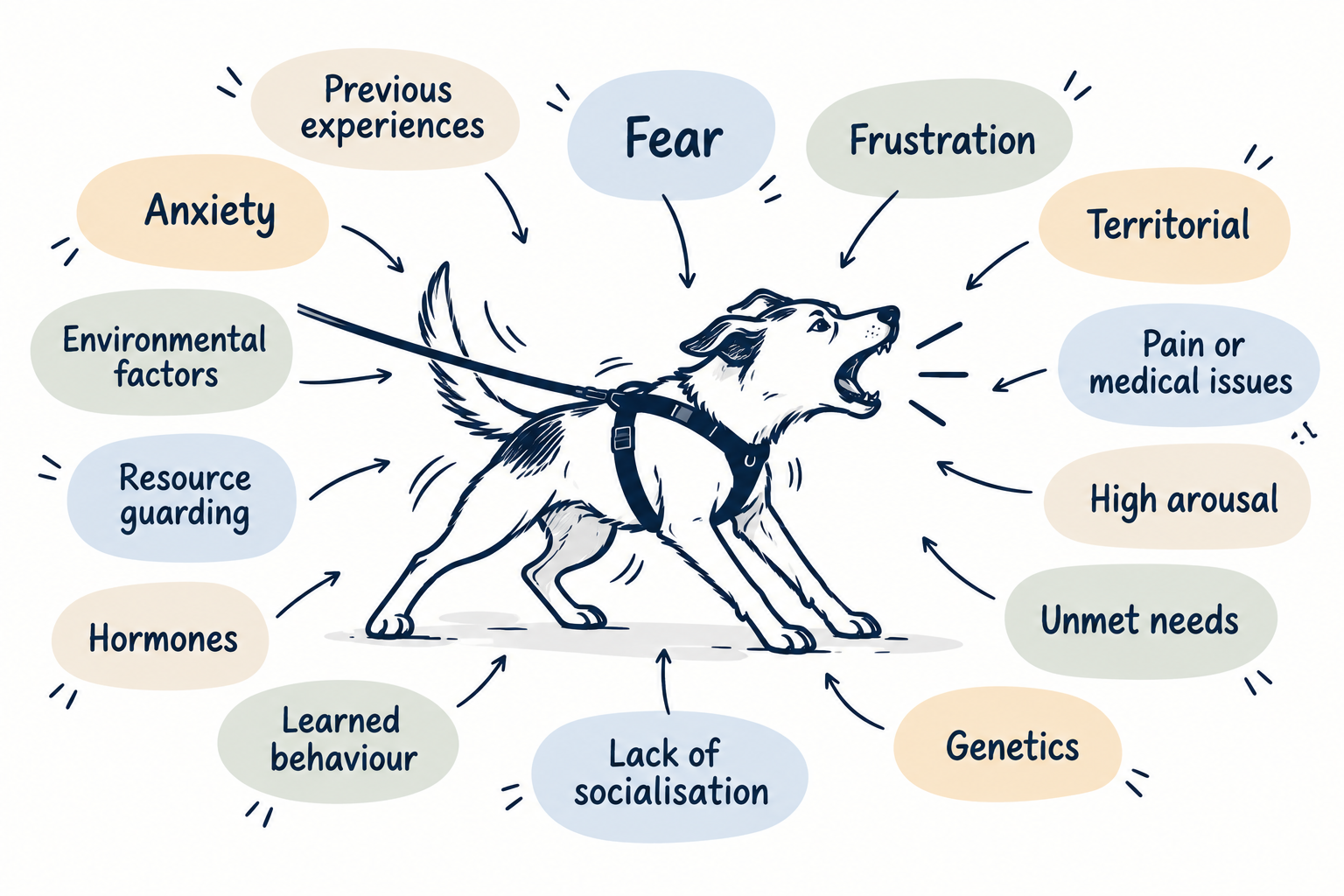
In fact, there are many factors that can contribute to reactivity, including fear, anxiety, pain, previous experiences, high arousal, unmet needs, and environmental or lifestyle factors.
Often, it's not just one factor driving the behaviour, but several. We need to identify not only what's contributing to your dog's reactivity, but also which factors are the primary drivers.
Why is your dog reactive?
Different causes require different treatment approaches. This is why we don't believe in a one-size-fits-all approach to reactive dog training.
Simply trying to stop the barking or lunging without understanding and addressing what's driving the behaviour may do little to resolve the underlying problem. At worst, it can increase your dog's distress and seriously damage the relationship you have with them.