

About Dr Liam
The science of veterinary medicine. The practicality of professional dog training.
I'm Dr Liam Brown, a veterinarian and behaviour consultant with nearly 20 years of clinical experience. I founded Pet Logic to bring together two areas I'm passionate about: understanding why dogs behave the way they do, and helping owners make practical, lasting changes.
Based in Wangara, Perth, I work with dogs experiencing behavioural difficulties, as well as owners who want to develop better communication, training and everyday skills with their dogs.
Veterinarian. Behaviour Consultant. Dog Trainer.

My Story
From Veterinary Medicine to Behaviour
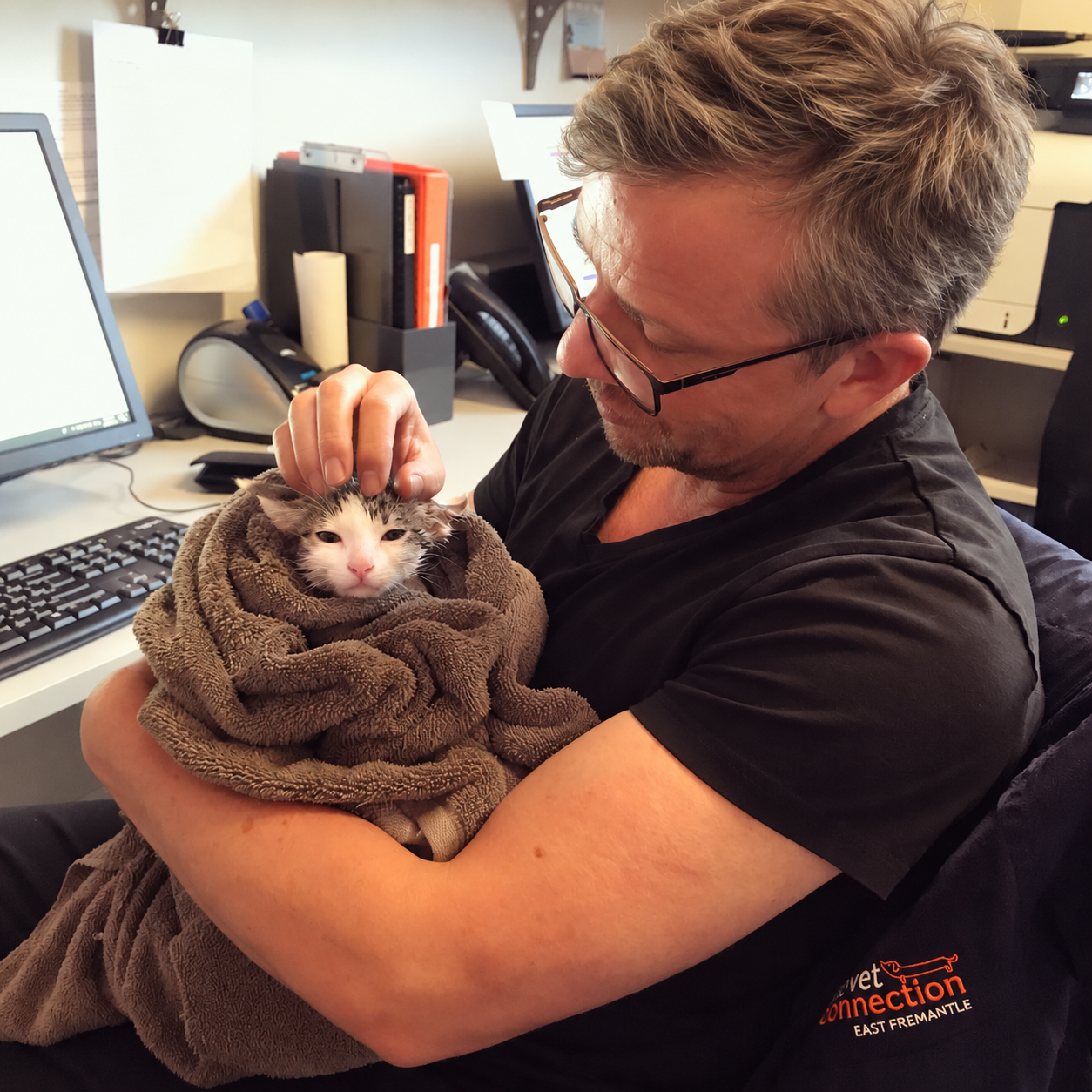
I graduated from Murdoch University in 2007 and spent much of my career working in general practice and emergency medicine, including more than a decade owning and running my own veterinary practice in East Fremantle.
Over the years, I became increasingly interested in animal behaviour. I regularly saw dogs whose problems weren't simply a matter of poor training. Fear, anxiety, frustration, pain and previous learning experiences could all influence how a dog behaved.
I wanted to understand these problems more thoroughly, rather than simply manage the symptoms.
That interest led me to pursue further education in veterinary behaviour and professional dog training, and ultimately to establish Pet Logic.
Today, I work exclusively in behaviour and training.
My Approach
Understanding the behaviour comes first.
Two dogs might bark, lunge or behave aggressively in exactly the same situation, but for completely different reasons.
One might be frightened. Another might be frustrated. A third might have learned that the behaviour successfully makes something unpleasant go away.
Treating them all in the same way makes little sense.
My approach is to work out what's driving the behaviour, identify the factors contributing to it, and develop a plan that addresses the underlying problem.
That may involve veterinary assessment, changes to the dog's environment, behaviour modification, practical training and, where appropriate, medication.
I also believe owners need more than a list of exercises. They need to understand what they're doing, why they're doing it, and how to apply it in everyday life.
The goal isn't simply a dog that performs well during a training session. It's a dog and owner who can function better together outside it.
Experience & Education
Nearly 20 years of veterinary experience.
And I’ve never stopped learning.
My veterinary degree was the starting point. Since then, I’ve continued to study behaviour, behavioural medicine, learning, cognition, behaviour modification and practical dog training. That combination matters because behavioural problems rarely have a single explanation. Understanding the medical, emotional and learning factors involved helps me develop a plan that's appropriate for your individual dog.

VETERINARIAN
BSc BVMS (Hons)
Murdoch University 2007

VETERINARY BEHAVIOUR
MANZCVS (Veterinary Behaviour) 2003

CLINICAL EXPERIENCE
General practice - Emergency - Practice ownership - Behaviour Vet

CONTINUING EDUCATION
Years of further education in behaviour problem diagnosis, treatment and prevention.
Veterinary knowledge helps me understand the problem. Practical training helps me develop the solution.
How can I help your dog?
At Pet Logic in Wangara, I offer veterinary behaviour consultations and practical dog training, with services tailored to the individual dog and the challenges you're experiencing.

What Our Clients Say