

Separation Anxiety in Dogs (Perth)

Assessment, diagnosis, and structured treatment — not guesswork
If your dog panics when left alone, this isn’t a training issue.
It’s an anxiety disorder — and it needs to be approached properly.
What separation anxiety actually is
Separation anxiety in dogs occurs when a dog experiences fear, distress, or panic when left alone, or when separated from a specific individual. In some dogs this presents as obvious panic. In others, it looks like constant hyper-attachment, inability to settle, or escalating distress as soon as departure cues appear.
Dogs are social animals. Being left alone does not come naturally to many of them. From an evolutionary perspective, being separated from the group would have carried real risk. That wiring doesn’t disappear just because a dog lives in a house.
If a dog has not learned — through gradual, appropriate exposure — how to tolerate being alone, particularly during development, they can struggle significantly when that expectation is placed on them later in life.
This is not stubbornness.
It is not manipulation.
And it is not something you “train out” with obedience or punishment.
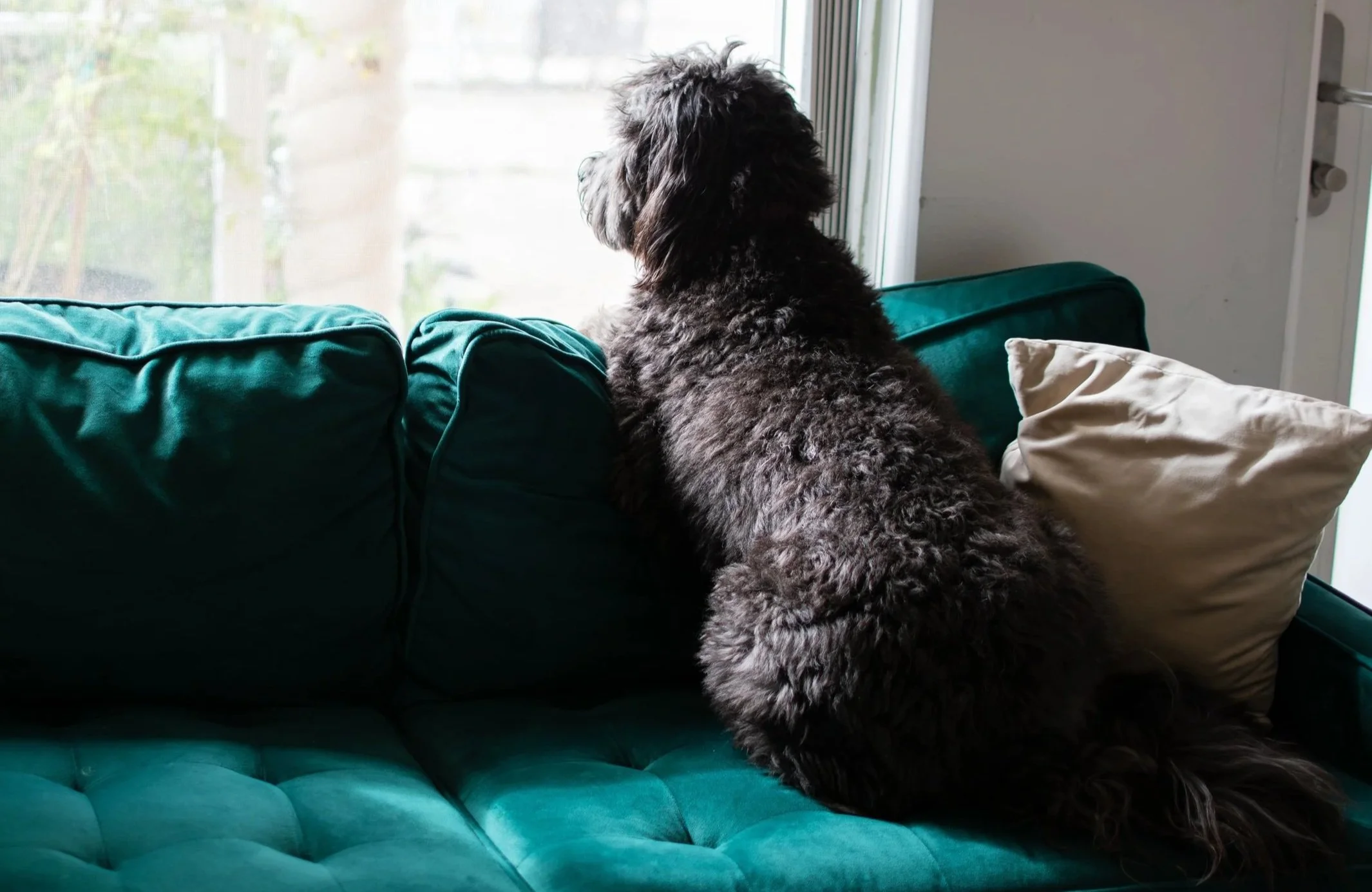
This page is for you if:
Your dog becomes distressed, vocal, destructive, or panicked when left alone
You feel trapped at home or constantly arranging care so your dog is never alone
You experience guilt, stress, or anxiety about leaving
Your dog damages your home or injures themselves
You are exhausted, overwhelmed, or starting to resent the situation — even though you care deeply about your dog
Separation anxiety places pressure on the dog and the household.
Ignoring that reality helps no one.
Why one-off advice usually fails

Separation anxiety is commonly approached with:
Handouts
Generic “steps”
Advice pulled from online forums
Well-intended but incomplete training plans
Most of these fail not because owners don’t try — but because they don’t have the information needed to:
Accurately assess anxiety levels
Recognise early stress signals
Identify true panic thresholds
Understand what progress should look like
Without that understanding, people either push too far, back off too much, or abandon the process entirely.
The role of the initial consultation
The consultation is not the treatment.
It is the diagnostic and planning stage.
Format
Ideally conducted in person at my Wangara premises
Virtual consultations are available when needed (with limitations around prescribing)
Before the consult
You’ll complete a comprehensive questionnaire covering:
Your dog’s history and personality
Daily routines and environment
Previous training and management attempts
Onset and progression of the problem
This allows the consultation to be focused and clinically meaningful.
During the consultation
We:
Confirm whether this is true separation anxiety
Rule out other contributors (generalised anxiety, noise sensitivity, medical issues, fear responses)
Assess baseline anxiety levels
Identify triggers and patterns
Clarify why current strategies are or aren’t working
Many behaviours look like separation anxiety but require a different approach. This step matters.
What you leave with
A clear understanding of what is happening and why
Clarity around what needs to change before behaviour modification can begin
A structured plan for moving forward
Guidance on whether the Separation Anxiety Programme is appropriate for your dog
Why the program exhists
The Separation Anxiety Programme (SAT) is where the work happens.
It exists because separation anxiety cannot be resolved with:
A single conversation
A checklist
A short training session
The programme is structured into three phases, each building on the previous one.
Phase 1: Understanding and short-term management
What separation anxiety actually is (and isn’t)
Immediate management to prevent panic rehearsals
Setting the foundation for effective work
Phase 2: Emotional State and Thresholds
Learning to read your dog’s emotional state
Identifying thresholds and early warning signs
Mapping triggers — separation-related and otherwise
Understanding why panic occurs before it explodes
Phase 3: Behaviour Modification
Structured, progressive exposure
Clear criteria for progress
Adjustments based on the dog in front of you — not a template
How support works inside the programme
This is not self-guided and it is not “figure it out as you go”.
A structured workbook that guides each phase
Two virtual consultations to review progress and troubleshoot
An online space for questions
Video uploads for feedback and review
Ongoing professional guidance so you know:
What to do
Why you’re doing it
When to move forward — and when not to
More understanding leads to better execution. Better execution leads to better outcomes.
What this approach deliberately avoids
Do-it-yourself plans without guidance
“Just tire them out” narratives
Punishment or suppression
Treating anxiety as a behaviour problem instead of an emotional one
Punishment does not change emotional responses.
We are not teaching dogs to endure being alone.
We are changing how they feel about it.
This is for you if:
You want to understand the problem properly
You are prepared to follow a structured process
You want support, not guesswork
You are committed to doing the work consistently
Who this approach is (and isn’t) for
This is not for you if:
You want a quick fix (and to be quite honest - there isn’t one)
You want to skip the assessment
You are looking for a single tip or technique that will change everything (again - there isn’t one)
You are not willing to change how the problem is approached
Consultation first — always
Access to the Separation Anxiety Programme is only available after an initial consultation.
This is non-negotiable.
Why?
Some conditions mimic separation anxiety
Some dogs need a different starting point
Skipping diagnosis wastes time and effort
The consultation ensures:
The right problem is being treated
The right approach is chosen
You are not set up to fail
Your next step
You have two options:
Book a discovery call
If you want to talk through whether this is the right pathwayBook your separation anxiety consultation
If you’re ready to begin assessment and move forward properly
My Personal Guarantee
If you complete the programme, attend all scheduled consultations and virtual meetings, follow the recommendations, and fully engage in the process, and you are not satisfied with the outcome, I will refund the full programme fee.
This work requires commitment, but when that commitment is met, I stand behind it.