

Dog Aggression Towards Other Dogs in Perth - A Vet’s Guide
Dog Aggression Towards Other Dogs in Perth — A Vet Behaviourist's Guide
Your dog lunges at other dogs on the lead. You've started avoiding parks and crossing streets. Learn what's really happening, why training alone often isn't enough, and how a vet behaviourist can help.
Every walk has become a stress test. Your dog lunges, barks, or snaps at other dogs — and you've started avoiding parks, crossing the street, or walking at odd hours just to get through the day. You feel isolated. You're embarrassed when it happens in public. And worst of all, you're convinced something is fundamentally wrong with your dog — that they're "broken" or permanently aggressive. The truth is far more nuanced, and far more treatable than you think.
Dog-directed aggression is one of the most misunderstood behaviour problems in Perth. Owners hear the word "aggression" and panic. Trainers sometimes frame it as a dominance issue (it rarely is). And many well-meaning people offer confident advice that actually makes things worse. What gets lost in that noise is this: aggression towards other dogs is usually rooted in fear, anxiety, or pain — not malice or dominance. Understanding which one is driving your dog's behaviour is the first step to genuine recovery.
What Dog-Directed Aggression Actually Looks Like
"Aggression" is a catch-all term that describes a huge spectrum of behaviours — and where your dog sits on that spectrum matters enormously for treatment. Many owners use the word "aggressive" to describe a dog that barks and lunges on the lead, when the dog may never actually make contact with another dog. Others use the same word to describe a dog that has caused serious injury. These are completely different situations requiring completely different approaches.
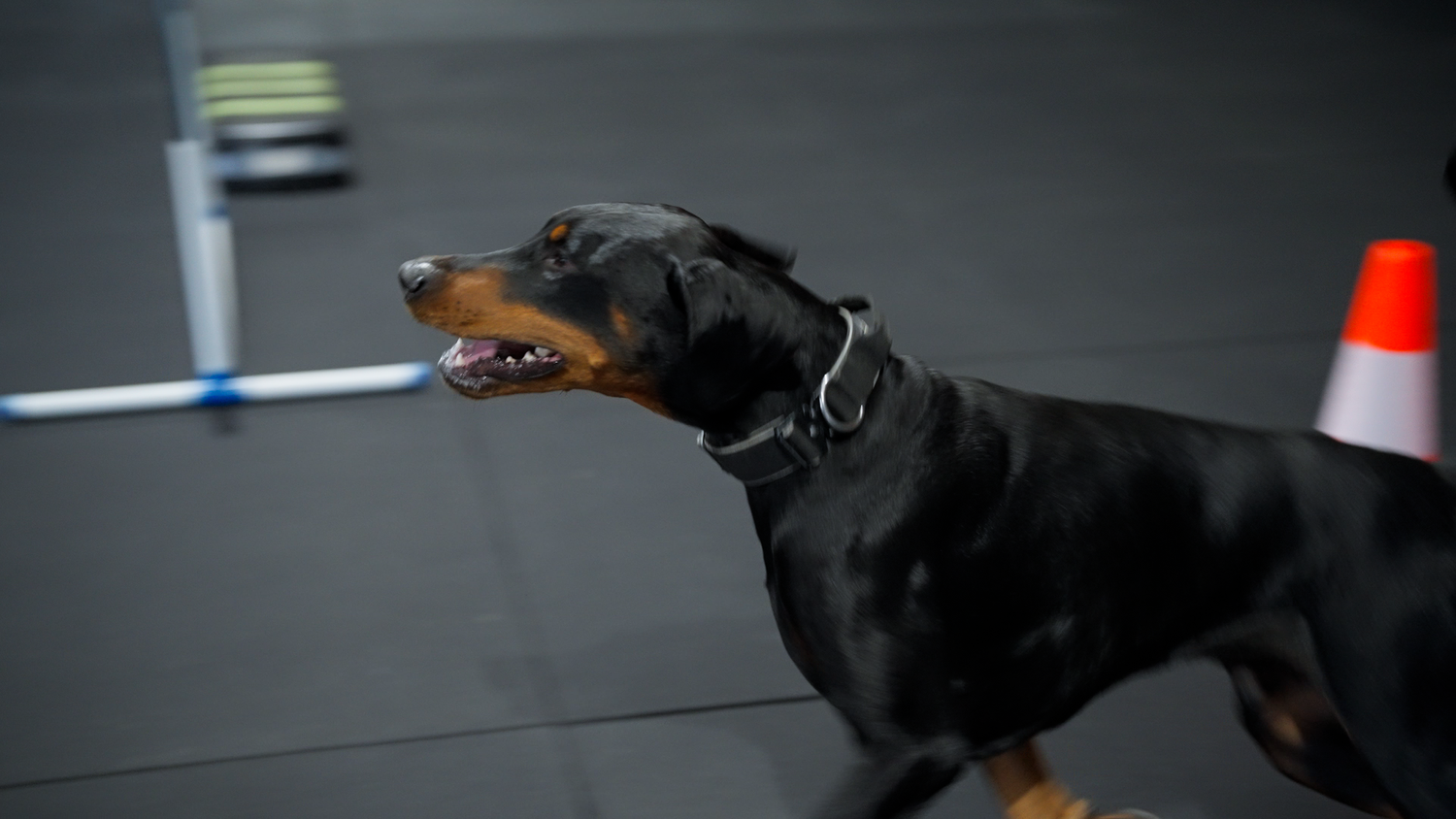
Leash reactivity is the most common form of dog-directed aggression seen in Perth. Your dog sees another dog approaching and reacts explosively — barking, lunging, straining on the lead. It feels aggressive, and it's terrifying to the owner, but it's often a fear response or a frustrated attempt to create distance. Many of these dogs would happily play with the same dog off-lead in a secure space.
Barrier frustration is closely related. A dog behind a fence or window becomes frantic when another dog passes. Again, this is frustration and excitement, not necessarily true aggression — though it can escalate into it over time if not addressed.
True aggression — snapping, growling, stiff body posture, resource guarding around other dogs, or contact aggression (actual biting) — sits at the other end of the spectrum. These are serious behaviours that require careful assessment and professional intervention.
Between those points exists a wide range of warning signs: raised hackles, stiff gait, hard eye contact, a refusal to break eye contact, intense stalking, rapid advances toward another dog. These aren't all the same. Some indicate fear. Some indicate arousal and poor impulse control. Some indicate pain.
The way your dog's aggression presents — the triggers, the severity, the consistency — tells us a lot about what's driving it. That's why the assessment process begins with observation and history, not assumptions.
Why Your Dog Is Aggressive Towards Other Dogs
Understanding the cause is essential because the treatment depends on it. A dog that is aggressive because it's terrified requires an entirely different approach than a dog that is aggressive because it's in pain. Here are the most common drivers of dog-directed aggression in Perth:
Fear and anxiety. This is the most common cause. A dog that had limited early socialisation, experienced a traumatic incident with another dog, or naturally has an anxious temperament will often develop fear-based aggression. The aggression is a defensive strategy — lunging and growling to keep the threat at a distance. These dogs are not trying to hurt other dogs; they're trying to protect themselves. Once you understand this, the strategy changes completely. Instead of punishing the aggression, you're teaching the dog that other dogs equal good things, and that they don't need to defend themselves.
Frustration-based reactivity. A dog on a tight lead approaching another dog experiences frustration — they want to say hello, investigate, or play, but the constraint of the lead creates arousal and frustration. This manifests as lunging and barking. It's not fear; it's over-excitement and lack of impulse control. The dog is frustrated by the barrier between them and the other dog. This responds well to training that teaches calmness around other dogs and strengthens impulse control off-lead.
Pain or medical causes. This is the one that most trainers miss — and it's often the most important. A dog with joint pain, dental pain, thyroid dysfunction, neurological disease, or other medical conditions may become aggressive towards other dogs specifically because physical contact or proximity triggers discomfort. We've seen dogs whose aggression resolved once their underlying arthritis was treated. We've seen thyroid dysfunction causing aggression that no amount of training could fix. Always rule this out first.
Lack of early socialisation. A dog that didn't have positive exposure to other dogs during the critical socialisation window (3–14 weeks) may grow up uncertain or fearful around them. This is learnable, but it takes time and careful management. These dogs often improve dramatically with structured exposure and confidence-building.
Previous traumatic experience. A dog that was attacked by another dog, or had a scary experience at a dog park, can develop lasting fear of other dogs. This is not about dominance; it's about trust and recovery from trauma. These dogs need careful, controlled exposure and time.
Resource guarding. Some dogs become aggressive around other dogs specifically when they have access to valued resources — food, toys, the owner's attention, territory. This is not necessarily generalised aggression towards all dogs; it's conditional and context-dependent. It's highly treatable with behaviour modification that teaches the dog different associations with the presence of other dogs.
Research shows that pain is a contributing factor in up to 80% of aggression cases in dogs. A dog that snaps at other dogs may be in physical discomfort that hasn't been identified. This is why medical assessment comes before behaviour modification.
Why Training Alone Often Isn't Enough
Many Perth dog owners take their aggressive dog to a trainer. Some see improvement; others see no change at all. The frustration that follows is understandable — but the problem is rarely the training itself. The problem is that training addresses behaviour modification and impulse control, not the underlying medical or emotional drivers.
A dog trainer can teach your dog impulse control, reduce reactivity through desensitisation, and build confidence through structured exposure. These are valuable interventions. But a trainer cannot:
Assess or treat medical causes. A trainer can't order bloodwork to check thyroid function, assess neurological status, or evaluate pain. If your dog's aggression is rooted in pain, the best training in the world won't fix it — because the pain is still there.
Prescribe medication. For many dogs — especially those with anxiety or fear-based aggression — medication can be transformative. It doesn't cure the problem, but it lowers the emotional ceiling so the dog can learn and respond to training. Only a vet can prescribe anxiolytic or behaviour-modifying medication.
Conduct formal behaviour assessments. If your dog has a history of biting, or if legal liability is a concern, you need a formal risk assessment. This is only within the scope of a vet behaviourist, and it has legal weight that a trainer's evaluation does not.
Integrate the full picture. A vet behaviourist looks at medical history, diet, environment, daily routine, previous training, genetic predisposition, and behaviour patterns simultaneously. A trainer typically focuses on the behaviour alone.
| Capability | Dog Trainer | Pet Logic (Vet Behaviourist) |
|---|---|---|
| Behaviour modification and impulse control training | ✓ Yes | ✓ Yes |
| Medical assessment and diagnosis | ✗ No | ✓ Yes |
| Prescribe anxiety or behaviour medication | ✗ No | ✓ Yes |
| Assess pain as a cause of aggression | ✗ No | ✓ Yes |
| Formal legal behaviour assessment for biting | ✗ No | ✓ Yes |
| Rule out neurological or hormonal causes | ✗ No | ✓ Yes |
Here's the key: behaviour modification and medical assessment are not competing approaches — they work together. The best outcomes happen when you identify and treat the root cause (medical, environmental, emotional) and simultaneously teach the dog new skills and responses. Training without diagnosis often fails because the underlying problem is still active. Diagnosis without training won't help because the dog still needs to learn how to respond differently.
What Happens at a Pet Logic Behaviour Consultation
When you bring your dog to Pet Logic in Wangara, the process begins with a comprehensive 60–90 minute Initial Behaviour Assessment. This is not a quick fix or a one-size programme. It's a thorough investigation into who your dog is, what they're experiencing, and what's driving the aggression.
Dr. Liam will evaluate: Your dog's complete medical history, any previous health issues or injuries, current diet and routine, family dynamics, the specific triggers and context of the aggression, when it started and how it's evolved, any previous training or behaviour interventions, your dog's early socialisation (or lack of it), and the emotional state of the household.
The outcome is a personalised treatment plan — not generic advice. If medical factors are suspected, referrals will be made or recommendations given. If anxiety or fear is the primary driver, you'll understand why and what medication might help. If training is the main intervention needed, you'll get a structured programme tailored specifically to your dog's triggers and your lifestyle.
From there, most dogs enter a structured training programme. This might include weekly or fortnightly sessions at the clinic, video tutorials showing you exactly how to practice at home, WhatsApp support for questions and quick check-ins, and carefully planned progressions that build your dog's confidence and impulse control. The timeline varies — some dogs show meaningful improvement within 4–6 weeks; others require months of consistent work. Dr. Liam will give you a realistic expectation.
Ongoing support is built in. Behaviour change takes time, and you're not doing it alone. As your dog progresses, the plan adapts. As barriers come up (and they will), you have professional support to troubleshoot. Most owners tell us that having someone invested in their dog's progress — who understands the emotional journey and the practical challenges — makes the difference between giving up and breaking through.
Frequently Asked Questions About Dog-Directed Aggression
Stop Managing. Start Understanding.
Dog-directed aggression is treatable — but only if you understand what's driving it. Let's get your dog the assessment and care that actually addresses the root cause.
Book an Assessment