

How to Stop a Puppy Biting: What Actually Works (and What Makes It Worse)
Your hands are covered in scratches and half the advice online seems to backfire. Here's why puppies bite, what genuinely stops it, and the rare cases where biting is worth a closer look.
Puppy biting is normal, healthy behaviour, not aggression. Puppies explore the world with their mouths and learn bite control through play. You stop it by teaching bite inhibition, redirecting onto appropriate outlets, and managing arousal, not by punishing the mouth. The popular tricks, yelping, muzzle-holding, bitter sprays, often make it worse.
Nearly every new puppy owner I meet in Wangara arrives with the same forearms: a lattice of pink scratches and the odd puncture. And nearly every one of them has already tried three or four things from the internet that either did nothing or made the biting more frantic. If that is you, you are not doing it wrong, and your puppy is not broken. You have simply been given advice that misunderstands what puppy biting actually is.
This article explains why puppies bite, what genuinely reduces it, the common methods that backfire, and the small number of cases where mouthing tips into something worth having assessed.
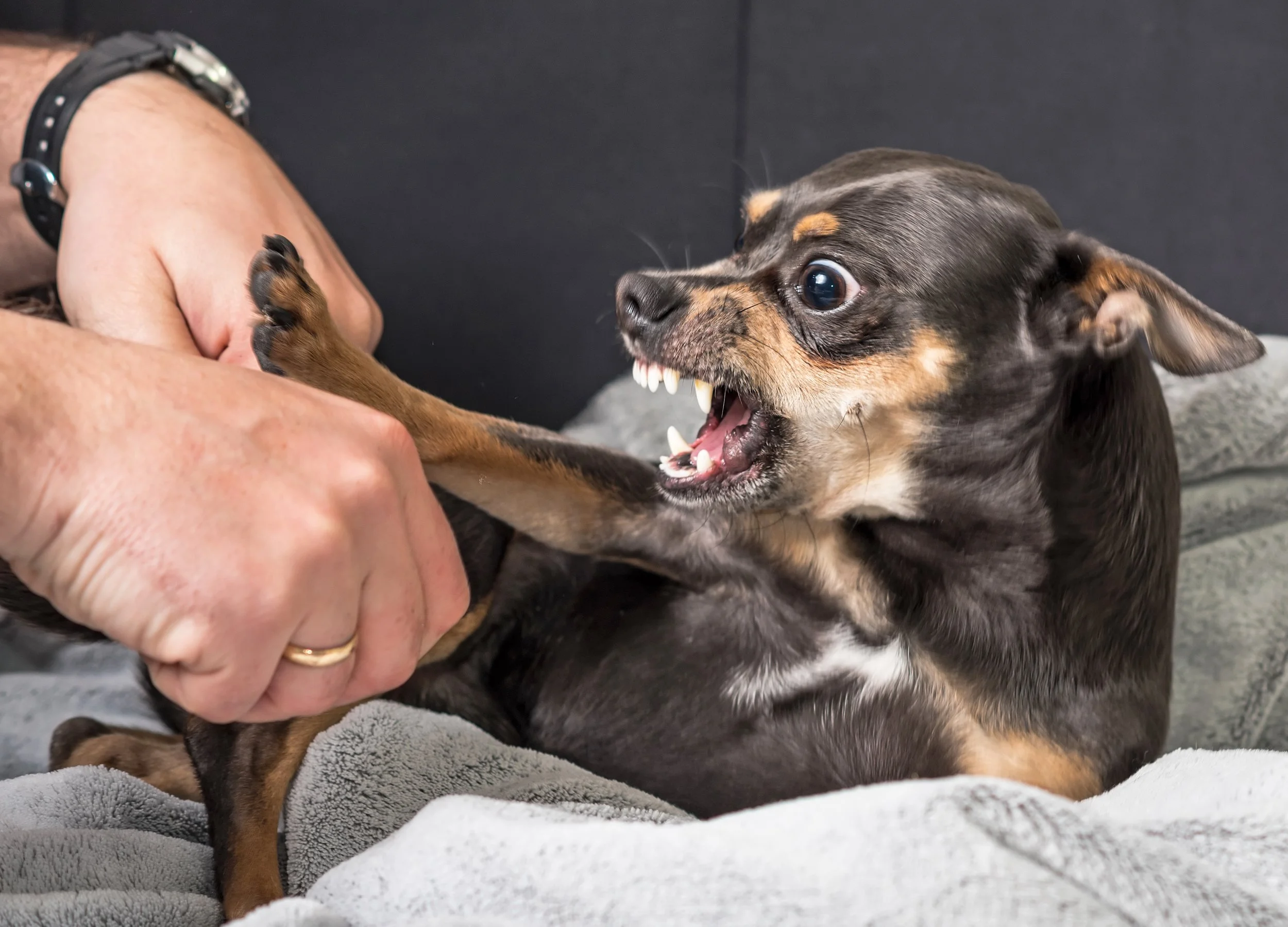
Why Do Puppies Bite So Much?
Puppies do not have hands. Their mouth is how they investigate texture, temperature, and everything new, including you. On top of that, biting serves a genuine developmental purpose: through play-biting with littermates and then with you, a puppy learns exactly how hard is too hard. That lesson, called bite inhibition, is one of the most important things a dog ever learns, and it is learned through mouthing, not despite it.
There are a few predictable drivers behind the biting that lands owners in my consult room:
The one most people miss: the bitiest puppy in the house is very often the most overtired one. Puppies need 18 to 20 hours of sleep a day. A puppy who "gets the zoomies and bites everyone" at 5pm most nights is usually not naughty, it is exhausted and has no off-switch yet. For many families, a stricter nap routine cuts the biting more than any training tip.
What Actually Stops Puppy Biting
The goal is not to punish the mouth into silence. It is to teach the puppy that human skin is delicate, that teeth get access to certain things and not others, and that calm gets rewarded. Here is the approach that works, in order.
- 1Fix sleep first
Before any training, make sure your puppy is actually sleeping enough, structured naps in a pen or crate every 60 to 90 minutes of awake time. This alone resolves a large share of "biting problems", because they were overtiredness problems.
- 2Redirect onto a legal target
Keep a soft toy or chew in reach in every room. When the teeth come for your hand, calmly swap in the toy. You are not saying "no biting", you are saying "bite this, not that". Consistency here does most of the heavy lifting.
- 3Mark the too-hard bites, then disengage
When a bite genuinely hurts, a calm "ouch" or "too bad", then stand up, fold your arms, and briefly remove your attention for 10 to 20 seconds. The lesson: hard teeth end the fun. Do this calmly and consistently, not dramatically.
- 4Reward the calm
The behaviour you pay attention to is the behaviour you get. Actively notice and quietly reward the moments your puppy settles, chews a toy, or chooses not to mouth you. Most owners only engage when teeth are involved.
- 5Lower the arousal
If play regularly tips into frantic biting, it is too fast or too long. Build in pauses, use food-based and sniffing games, and end sessions before the puppy loses the plot rather than after.
- 6Meet the chewing need
Through teething especially, provide appropriate chews and puzzle feeders. A puppy with a real outlet for its mouth has far less reason to use yours.
The Popular Advice That Backfires
Here is where I need to be blunt, because these methods are everywhere, from dog parks to well-meaning relatives, and I see the fallout regularly.
Yelping loudly like a littermate
The theory sounds lovely, mimic how a sibling reacts. In practice, a high-pitched yelp excites many puppies further, turning a bite into a game or, in more sensitive puppies, startling them. It works for a minority and winds up the rest. A calm, boring disengagement is more reliable.
Holding the muzzle shut or pinning the puppy
This teaches your puppy that hands coming toward its face are unpleasant and to be resisted. You are laying the groundwork for handling problems and defensive snapping down the track, the opposite of what you want.
Bitter sprays and "alpha" corrections
Bitter apple treats the symptom on one object while ignoring why the puppy is mouthing. "Alpha rolls" and scruffing are based on dominance ideas that behavioural science discarded decades ago, and they add fear to a relationship that should be built on trust.
Punishing a puppy for mouthing can suppress the warning behaviours, including the growl, without changing how the puppy feels. As I cover in our guide on dog growling, a dog that has learned its warnings get punished is a dog more likely to skip straight to a bite later. Teach, redirect, and manage instead.
When Is Puppy Biting a Red Flag?
The overwhelming majority of puppy biting is completely normal and fades with the right handling by around 5 to 6 months. But there is a small subset where mouthing is not ordinary play, and this is the distinction a veterinary behaviour consultant is trained to make and a general trainer often cannot.
It is worth having a puppy assessed if you consistently see:
If the phrase "my puppy keeps biting me aggressively" is what brought you here, and it genuinely looks like more than boisterous play, do not wait it out. Early, targeted intervention during the puppy period is the single best window you will ever have. If it is early resource guarding, our guide on resource guarding in dogs covers the next steps.
The Perth Reality: Set the Foundations Early
Perth puppies have one big advantage, our climate means outdoor socialisation and enrichment are possible almost year-round, which helps burn energy that would otherwise land on your hands. The trap I see is families relying on the backyard to do the work. A large Butler or Baldivis yard keeps a puppy busy, but it does not teach bite inhibition, and it does not build the impulse control that biting depends on. That comes from structured, human-led practice, ideally with guidance during the critical socialisation window before 14 to 16 weeks.
This is exactly what our Puppy Foundations program in Wangara is built around, not just teaching a puppy to stop biting, but building the calm, confident, well-regulated dog that biting is a symptom of when it is missing.
Frequently Asked Questions
At what age do puppies stop biting?
Most puppies naturally reduce mouthing by around 5 to 6 months, as adult teeth come in and impulse control develops. With consistent redirection and good sleep habits it usually improves well before then. If biting is still intense and escalating past 6 months, it is worth having assessed.
Why does my puppy keep biting me aggressively?
Most "aggressive" looking biting is actually over-arousal or overtiredness, a puppy with no off-switch, not genuine aggression. Loose, wiggly biting during play is normal. Biting with a stiff, frozen body, or paired with growling over food or resources, is different and worth having assessed by a veterinary behaviour consultant.
Should I yelp when my puppy bites me?
Usually no. Although it is widely recommended, a high-pitched yelp excites or startles many puppies rather than calming them, and can make biting worse. A calm, boring response, marking the hard bite and briefly removing your attention, is more reliable for most puppies.
Is it bad to hold my puppy's mouth shut?
Yes, avoid it. Holding the muzzle or pinning the puppy teaches it that hands near its face are unpleasant, which can create handling problems and defensive snapping later. Redirect onto a toy and manage arousal instead.
How do I stop my puppy biting my children?
Manage first: never leave puppy and young children unsupervised, and keep interactions calm and structured. Give children a toy to redirect onto rather than pulling hands away, which triggers chasing. Teach kids to be a tree, still and boring, when the puppy gets mouthy, and reward the puppy for calm. If biting is targeted or intense, seek professional guidance.
Does overtiredness really cause puppy biting?
Yes, very commonly. Puppies need 18 to 20 hours of sleep a day, and an overtired puppy becomes hyperactive and bitey rather than sleepy, much like an overtired toddler. For many families, enforcing regular naps in a pen or crate reduces biting more than any single training technique.
Where can I get help with puppy biting in Perth?
Pet Logic runs a Puppy Foundations program and behaviour consultations from purpose-built rooms in Wangara, servicing Perth and the northern suburbs. As a veterinary behaviour consultancy we can tell normal mouthing apart from early behaviour concerns like resource guarding or fear, and build a plan that fits your puppy and household.
Give Your Puppy the Right Start
Biting is one small piece of raising a calm, confident dog. Our Puppy Foundations program in Wangara sets the foundations during the window that matters most, and sorts the biting along the way.
Book Puppy Foundations