

How to Toilet Train a Puppy Perth | Vet-Behaviour Guide | Pet Logic
How to Toilet Train a Puppy in Perth: The Routine That Actually Works
Puddles on the rug, a puppy who holds on outside then wees the second you come back in, and advice that contradicts itself. Here's the routine that works, how long it really takes, and when accidents aren't a training problem at all.
To toilet train a puppy, take them to the same outdoor spot straight after sleeping, eating and playing, and every 1 to 2 hours while they're awake. Reward them within seconds of finishing, supervise or confine them the rest of the time, and never punish accidents. Most puppies are reliable somewhere between 4 and 6 months of age.
Toilet training is the first real test of every new puppy household, and it is the one I hear the most frustration about in my Wangara consulting room. The puppy that goes perfectly on Tuesday and wees on the couch on Wednesday. The puppy who stands in the yard for fifteen minutes doing nothing, then squats on the kitchen tiles the moment the door closes.
None of that means your puppy is slow, stubborn or spiteful. Toilet training is part learning and part physical development, and most of the problems I see come from a routine that doesn't match what a puppy's bladder can actually do. Get the routine right and it gets much easier. This guide covers that routine, realistic timeframes, what to do about accidents, and the signs that point to a medical or anxiety problem rather than a training one.
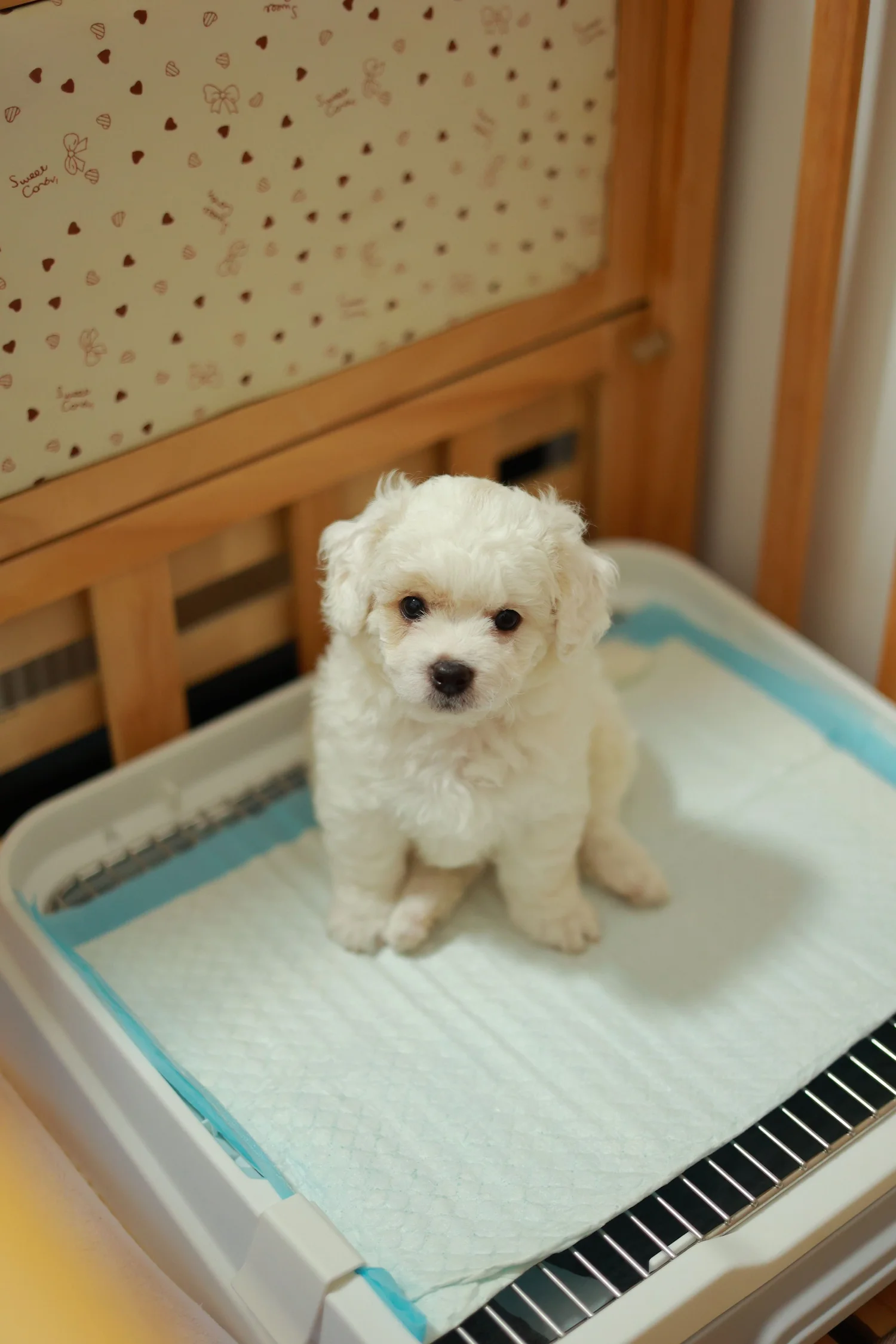
How Long Does It Take to Toilet Train a Puppy?
For most puppies, expect 4 to 6 months before they are reliable, with steady improvement from the first week. Small breeds often take longer because their bladders are tiny. Puppies from pet shops or puppy farms can take longer again, sometimes up to 12 months, because many of them spent their early weeks living in pens where they had no choice but to soil where they slept. That natural instinct to keep their bed clean has to be rebuilt.
A rough guide many vets use is that a puppy can hold on for about their age in months plus one, in hours. A 3 month old might manage around 4 hours. Treat that as a ceiling when they're asleep or resting, not as a schedule. An awake, playing puppy needs to go far more often.
What about toilet training a puppy in 7 days? In a week you can get the routine locked in and cut accidents dramatically, and that is worth aiming for. What you won't have is a reliably trained puppy, because bladder control is physical development as much as learning. Programs that promise full toilet training in a week are really measuring how consistent the owner is, not the puppy.
When Does a Puppy Need to Go?
Most accidents happen at predictable moments. If you get your puppy outside at these times, you prevent most accidents before they happen:
The Toilet Training Routine That Works
Toilet training is simple, but you have to be consistent. It rests on two things: make going in the right place happen often and pay off well, and make accidents in the wrong place as unlikely as possible.
- 1Choose one spot, and choose it deliberately
Pick a spot close to the door with the surface you want long term: grass, sand or a turf patch. Puppies develop surface preferences early, so a puppy trained on the garden bed will keep choosing the garden bed.
- 2Go out on a schedule, not when you notice
Use the trigger moments above plus a timer for your puppy's age. Feed meals at set times rather than leaving food down all day, because free feeding makes poo timing unpredictable.
- 3Go with them, and be boring
Take your puppy out on a lead and stand still at the spot. No games or chatting until they've gone. If you send them out alone, you can't reward them at the right moment, and you won't know whether they actually went.
- 4Reward within three seconds of finishing
A small, high-value treat and quiet praise, out at the spot rather than back at the door. Then give them a few minutes to sniff and explore, so they learn that going doesn't mean being taken straight back inside.
- 5Add a cue word
Say a word like "quick wees" just as they start to go. Over a few weeks it becomes a cue, which is extremely useful before bed, before car trips, and on rainy nights.
- 6Supervise or confine the rest of the time
If your eyes aren't on your puppy, they should be in a pen, a crate, or tethered to you on a lead. Most dogs avoid soiling a small resting space. Free run of the house before they've earned it is where most accidents come from.
- 7Keep a simple log for the first week
Jot down the times of meals, wees, poos and accidents. Within a few days your puppy's pattern becomes obvious, and you can schedule around it instead of guessing.
- 8Expand freedom one room at a time
Once your puppy has gone about two weeks without accidents in one area, add the next room. If accidents start again, go back a step. That's normal, not failure.
What Is the 10-10-10 Rule for Toilet Training?
There are a few versions going around. The one worth using gives each trip outside a clear structure:
It works because it fixes the most common mistake, which is bringing a puppy back inside who hasn't gone yet and giving them the run of the house.
What to Do When Your Puppy Has an Accident
Accidents are part of toilet training. How you respond decides whether they become less frequent or start happening out of your sight.
If you catch them in the act
Calmly interrupt with a neutral sound or "outside", not a shout. Scoop them up or lead them straight to their spot, and reward them if they finish there. That's it.
If you find it afterwards
Clean it up and say nothing to the puppy. They cannot connect your reaction to something they did minutes ago. Treat the accident as information about your routine: supervision slipped, or the gap between trips was too long for their age.
Clean it properly
Use an enzyme-based cleaner made for pet urine. Ammonia-based products can smell like urine to a dog and draw your puppy back to the same spot. If a spot keeps being used, block access to it for a few weeks.
Punishing a puppy for an accident, whether by rubbing their nose in it, smacking or yelling, doesn't teach them that inside is the wrong place. It teaches them that weeing in front of you is dangerous. The result is a puppy who sneaks behind the couch to go, and who won't go on the lead outside while you're watching, which makes training slower. Punishment is also a common contributor to submissive urination, covered below.
Should You Use Puppy Pads?
Puppy pads have a place, but they come with a catch. Pads teach a puppy that a soft, absorbent surface indoors is an acceptable toilet, and bath mats, rugs and towels feel very similar. Many of the "why does my dog wee on the rug" cases I see started with pads.
They make sense in a few situations: apartments with no private outdoor space, very young puppies who can't hold on through a long stretch, and households where no one is home for part of the day. If you use them, use them with a plan to phase them out. Put the pad or a turf tray near the door, move it gradually outside, and then remove it. Real turf trays usually transfer to outdoor toileting better than paper pads.
Toilet Training Overnight
Take your puppy out last thing before bed and keep their sleeping area close to you, so you hear them stir. For puppies under about 12 weeks, set one alarm for the early hours rather than waiting for crying. That prevents an accident, and it avoids teaching your puppy that crying gets you out of bed. Keep night trips dull: lights low, no play, straight back to bed. Every few nights, push the alarm out by 30 minutes until they sleep through.
The Perth Factor: Winter Rain, Summer Heat and Small Yards
A routine that works in a textbook can fall apart in a Perth backyard. Three local issues come up again and again.
Puppies who refuse to go out in the rain
Perth gets most of its rain in winter, and plenty of puppies will stand at the door looking at wet grass and turn straight around. Go out with them under an umbrella, give them a covered or sheltered spot close to the door, and make wet-weather wees worth a lot more treats. This is where your cue word earns its keep. Don't let rainy days become days off, or the puppy learns that inside is the backup plan.
Hot paving and artificial turf in summer
On a 38 degree day, paving and synthetic turf can get hot enough to burn a puppy's paw pads, and a puppy who gets burnt on the way to their spot will avoid that spot. Before you go out, press the back of your hand on the surface for seven seconds. If it's too hot for you, it's too hot for them. Use a shaded patch, hose down artificial turf, and schedule the midday trips to cooler spots.
Apartments, townhouses and tiny courtyards
More Perth puppies are growing up in apartments and small-lot homes, from the inner city to the new estates in Alkimos and Yanchep. A balcony turf tray is a sensible option, particularly before your vet gives the all-clear after the final puppy vaccinations, when public grass isn't safe yet. Pick one tray location and stick to it, and build in trips downstairs for the extra time it takes to get out of an apartment.
When Accidents Aren't a Training Problem
This is the part most toilet training guides leave out, and it's where a veterinary behaviour consultant earns their place. Some puppies keep having accidents despite a good routine because the cause isn't training at all. Book a vet check before you assume it's a training issue if you see:
Excitement and submissive urination
Some puppies wee when they greet people, or crouch, roll over and dribble when someone leans over them or speaks sternly. Neither is a toilet training failure, and punishment makes both worse. Keep greetings low-key, crouch side-on instead of looming over them, and greet them outside for a few weeks. Most puppies grow out of it as their bladder control and confidence mature.
Accidents driven by anxiety
If accidents only happen when your puppy is left alone, that may be separation-related distress rather than a training gap. Our guide to separation anxiety in dogs covers the signs. Accidents during storms or fireworks point to noise fear, which we cover in our thunderstorm anxiety guide. And lifting a leg on furniture or walls is usually marking, which is a separate behaviour from toileting and needs a different plan.
Toilet training and behaviour are linked. A puppy who is punished for accidents often becomes wary of their owner, and a puppy with an anxious start often struggles with toileting. If you're also seeing frantic biting, fearfulness or distress when alone, it's worth looking at the whole picture. Our guide to puppy behaviour problems explains what's normal and what needs early help.
Frequently Asked Questions
What is the 10-10-10 rule for toilet training puppies?
Take your puppy to their toilet spot on lead and wait up to 10 minutes. If they go, reward them and give about 10 minutes of supervised free time inside. If they don't, put them in their pen or crate for about 10 minutes, then try again. It stops puppies coming back inside with a full bladder.
What age should a puppy be toilet trained?
Most puppies are reliably toilet trained somewhere between 4 and 6 months of age. Small breeds, and puppies from pet shops or puppy farms that lived in soiled pens, often take longer, sometimes up to 12 months. Steady improvement from the first week is the sign you're on track.
How long does it take to toilet train a puppy?
With a consistent routine, most puppies make big progress in the first one to two weeks and become reliable over 4 to 6 months. Bladder control is physical development as well as learning, so even a perfectly trained puppy can't hold on longer than their body allows.
How do you stop a puppy peeing and pooping in the house?
Take them out after waking, eating and play, and every 1 to 2 hours while awake. Reward them within seconds of going in the right spot, and supervise or confine them the rest of the time. Clean accidents with an enzyme cleaner and never punish them, because punishment teaches puppies to hide when they go.
Can you toilet train a puppy in 7 days?
You can establish the routine and dramatically cut accidents in 7 days, but you can't make a puppy reliably toilet trained in a week. Bladder control develops over months. Treat the first week as setting up the habit, not finishing the job.
Why is my toilet-trained puppy suddenly having accidents again?
Sudden regression is often medical, with urinary tract infections a common cause, so start with a vet check. If your puppy is healthy, look for changes: a new home, a new pet, a change in routine, too much freedom too soon, or anxiety when left alone. Go back a step in the routine while you work out the cause.
Should I wake my puppy at night to go to the toilet?
For puppies under about 12 weeks, yes. Set one alarm for the early hours rather than waiting for them to cry, keep the trip quiet and boring, and put them straight back to bed. Push the alarm later by 30 minutes every few nights until they sleep through.
How do I toilet train a puppy in an apartment?
Use a real turf tray in one fixed spot on the balcony, and treat it exactly like an outdoor toilet spot: take them to it on schedule and reward them there. Once your vet clears your puppy after their final vaccinations, add regular trips outside and phase the tray out if you want them toileting outdoors.
Where can I get help with puppy toilet training in Perth?
Pet Logic runs Puppy Foundations and behaviour consultations from purpose-built rooms in Wangara, servicing Perth and the northern suburbs. As a veterinary behaviour consultancy, we can tell a routine problem apart from a medical or anxiety-related one and build a plan that fits your puppy and your home.
Give Your Puppy the Right Start
Toilet training is one piece of raising a calm, confident dog. Our Puppy Foundations program in Wangara covers routines, socialisation and the early behaviour habits that matter, while your puppy is still at the age when all of it comes easiest.
Book Puppy Foundations